Marine Lift Weight Explained
Understanding marine lift weight is essential when adding a lift system to your boat. Adding a marine lift or dinghy davit system…
How much weight does a marine lift add, and does it affect performance?
In this guide, you’ll learn the exact weight of typical systems, how that weight impacts your boat, and how to choose the right setup.

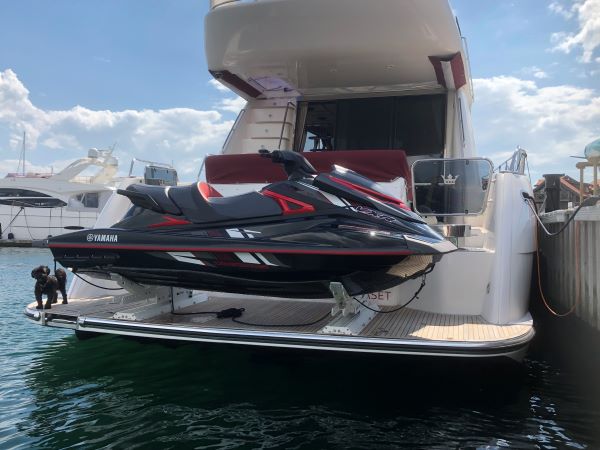
Marine lift weight on boat swim platform
Average Weight of a Marine Lift
The weight added by a marine lift depends on the model and configuration.
For example:
- L200 lift: ~155 lbs (70 kg)
- XL500 lift: ~180–200 lbs (80–90 kg)
- Hydraulic pump: ~38 lbs (17 kg) including fluid
Total weight added:
- Minimum: ~193 lbs (L200 + pump)
- Maximum: ~238 lbs (XL500 + pump)
This means most systems add between 200 and 240 lbs to your boat.
Where This Weight Is Added
The weight is typically distributed in two areas:
- Swim platform (stern): lift structure
- Engine room / lazarette: hydraulic pump
This distribution matters because weight at the stern has a bigger effect on boat balance.
Does a Marine Lift Affect Boat Performance?
Yes — but usually less than people expect.
Adding weight to the stern can:
- Slightly reduce top speed
- Increase fuel consumption
- Change trim and balance
However, modern systems are designed to minimize this impact. Keeping the weight closer to the transom helps maintain better balance and performance
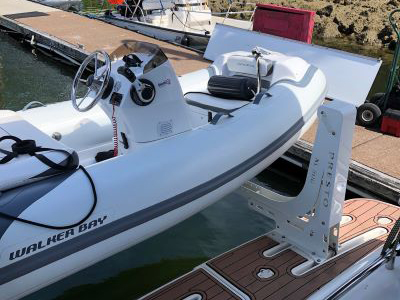
Key Factors That Influence Weight Impact
Not all boats are affected equally. The impact depends on:
1. Boat Size
- Larger boats: minimal impact
- Smaller boats: more noticeable
2. Weight Distribution
- Systems that keep the load closer to the transom perform better
3. Type of Lift System
- Rail systems can help position weight more efficiently
- Fixed systems are simpler but may shift weight further aft
Real Example: Total Load on Your Boat
If you install a full system:
- Lift: 180–200 lbs
- Pump: 38 lbs
- Dinghy or PWC: 200–1000+ lbs (depending on model)
Total added load can exceed 400–1000+ lbs
This is why choosing the right lift system is critical.
How to Choose the Right Marine Lift (Weight Matters)
To avoid performance issues:
- Match lift capacity to your dinghy or jet ski
- Avoid over-sizing (extra weight = unnecessary impact)
- Consider your swim platform length
- Keep weight as close to the boat as possible
Does Weight Affect Fuel Efficiency?
Yes, but slightly.
More weight means:
- More drag
- Higher fuel consumption
However, the difference is usually small if:
- The system is properly installed
- The weight is balanced correctly
Explore our XL500F marine lift for heavier loads.
FAQ (SEO Boost Section)
How much weight does a boat lift add?
Most marine lifts add 200–240 lbs including the hydraulic system.
Is 200 lbs a lot for a swim platform?
For most boats, no — but smaller boats may feel the difference more.
Will a dinghy davit affect boat performance?
Yes, but minimally if installed correctly and properly balanced.
What is the lightest marine lift option?
Compact systems like smaller hydraulic lifts (~150 lbs) are the lightest.
Final Verdict
A marine lift typically adds 200–240 lbs, which is relatively low compared to the total load your boat can handle. The key is not just the weight—but how and where it is distributed.
Choosing the right system ensures:
- Minimal performance impact
- Better balance
- Safer operation